The Power Of Artistry
ENG 170 Multimedia Project: The Exclusion of Art
Introduction
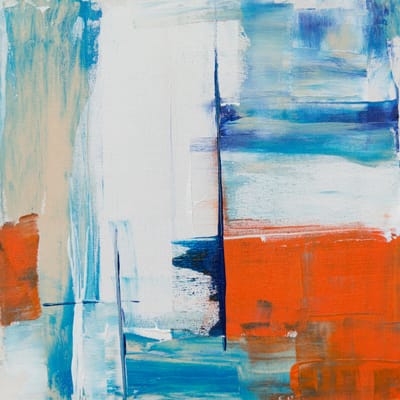
When people hear the word art they often think of painting and drawing, but art can be singing, music composing, dancing, acting, writing, sculpting, photographing, instrument playing, film making, and so forth. Artistry is a form in which individuals are liberated thinkers, problem solvers, innovative creators, and critical objectors; these are all some essential qualities students develop from their interaction with art. Art professions in many ways than one have been considered the lowest of all careers because it is often devalued as a hobby instead of a job. Traditionally speaking, individuals feel that art is not a form where individuals develop any concrete skills because the artistic tasks require expressing themselves, and those who are artistic see the world differently.
Some people believe that art instruction in any of its forms are not as valuable to a child’s education as the core courses taught in school like math, science, technology and those found in STEM curriculum. Some schools often promote STEM and Art courses individually, because they do not recognize the connections between these two concepts and the value of including the arts in learning. However, some educators recognize the connection between learning skills through creativity and encourage STEAM learning because it makes STEM learning more interactive and makes students want to learn. They recognize how the arts are related ideas which will often make these core skills more practical and intriguing. Should we give art education the same credence as we do STEM courses?
Art Education should be given the same credence as academic STEM courses. 1) Art Education is important because creativity originates from people’s interaction with art. 2). Art Education is worth studying because pursuing artistry is a reasonable profession since it intertwines with STEM courses. 3) Art Education is beneficial to individuals both mentally and socially.
Evolution of creativity

...that the work of art or science is not only a creation of the man who does it, but that its function in the viewer or the student is to get in movement a similar creative process. It is in this way that something is ‘communicated.’ But what is communicated is not something belonging only to the man who did the job. Rather, it is also a potentiality of the man who views it, so that a creative person helps to reveal to others their own potential for creativity. (46)
David Bohm argues that science and art are undeniably connective concepts. Being creative is not only a skill that every human being develops, it is also an essential tool that joins people and ideas together. Creating or innovating art not only opens the linkup between the creator and the observer, it also sets the scene for the ability to communicate the feelings or emotions that have emerged from unique artistic pieces. Art education not only builds an exceptional capability of inventiveness, it also provokes a conversation that strengthens the artist's work or gives a sense of encouragement through the various influences that their artistic work delivers. Creativeness stems from an individual's interaction with art because it leads to concrete communication between people of all backgrounds and that can benefit its credibility towards STEM courses. Finally, being artistic helps stimulate STEM education and that benefit can be meaningful to many professions.
STEAM Learning Enchanchements
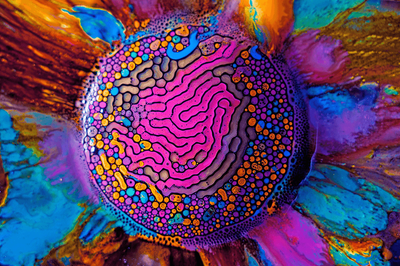

In this specific photographic reaction above, Fabian mixed different colors of watercolor paint with a black oil named ferrofluid that is magnetic, and it is also hydrophobic meaning that the ferrofluid does not mix with any water consistencies. From the result of that process, it created the image which is basically a stream separated with different watercolor paints and on the edges is the paint residue which represents the hydrophobic reaction because the paint did not mix with the ferrofluid. Art and science might seem as if they cannot be consolidated, but this science nerd and art lover manifested that myth to be a fact. Art might be inferior in comparison to science and math, but when they are fused together it produces something remarkable and self-evident to the naked eye that strikes some core of sentiment. The demonstration above is a form of psychedelic science which is a new form of science that includes creativity and new innovations that often help patients that struggle with depression, post-traumatic stress disorder and other mental health issues. The authenticity that sciences and art displays is exactly why educators need to implement art learning into their various STEM courses which will lead to some realistic view of artistry. As a result, art not only benefits STEM careers in which individuals must be innovative, it also improves our mental health and social abilities.
Developement of Menalth health with art
Art Education is also beneficial to individuals both mentally and socially. Art is a form in which individuals’ release their emotions and reflection processes. Art not only helps strengthen the brain, it also helps us with developing better people skills and developing our own ideas in a cohesive manner. According to Rian Wilkinson, a music teacher/professor at Bronx Lab High School and City College of New York for at least 16 years states:
STEM students are art students. Music students are STEM students. Tying student
achievement in Math and Science to participating in the arts - there is a specific
connection between the non-bias one finds in learning an instrument, learning to paint,
learning to draw, learning algebra, learning biology - it is all exploratory and very
personal. Arts and science are intertwined. (In-person Interview Rian Wilkinson)
Art and scientific skills are essential to learning because it has been proven by neuroscientists that when people are learning and consistently practicing music the brain simultaneously fires up which means that the brain is transferring information back and forth from the creative and cognitive sectors of the brain. It also means that the brain motors are strengthened in order to produce neurons which is needed to regulate the brain's function. The Gale Encyclopedia of Alternative Medicine written by Paula Ford-Martin an experienced writer and editor explains:
Art therapy provides relaxation and stress relief. Chronic stress can be harmful to both
mind and body. Stress can weaken and damage the immune system, can cause insomnia
and depression, and can trigger circulatory problems (like high blood pressure and
irregular heartbeats). When used alone or in combination with other relaxation
techniques, such as guided imagery, art therapy can effectively relieve stress. (Martin
131)
Art therapy is immensely useful because it can be used to reduce stress and minor depressive episodes. This therapy also unlocks the brain and mind which causes it to generate critical insight into one’s feelings, route of thinking and comprehending, and open an individual's ability to create. Art therapy is beneficial because it stimulates people’s mental capacity, and it is an organic treatment tactic that helps people’s mental health. Creativeness learned from art can be used to treat and diagnose mental issues in the field of medicine, but that may not have become a practice without individuals applying creativity in their education.
Furthermore, art education is fundamental, but opponents believe that STEM education is saturated into our everyday lives.
STEM IS EVERYWHERE
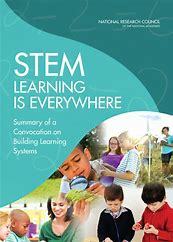
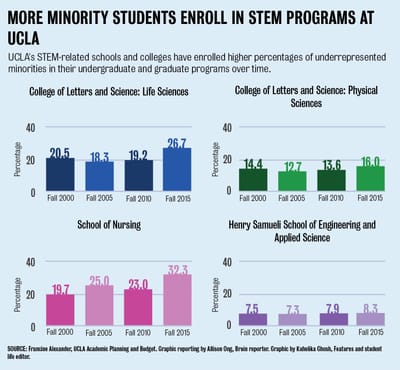
Others may argue that art education should not be given similar authority to STEM courses because STEM is infused in our daily lives. STEM is all around us everywhere we go because it is a fast-paced educational category with an abundance of resources. However, this is not a valid argument because art is observed as valuable, and it can be consolidated within STEM related courses. This idea is pointed out in an interview with Nancy Campos the SUNY New Paltz Director of AC^2 a STEM program states, “ STEM is an everyday thing that can be seen by people as useful because everything around us is seen as a STEM thing. Computers, furniture, buildings, cars, etc. It’s all STEM-related or uses STEM principles. In that sense, STEM is more inclusive.” (In-person Interview Nancy) STEM is believed to be more important because it demonstrates inclusivity, and it also can be applicable to a lot of situations in our lives, and it holds a higher validation in our culture than art. Even though the perspective is that what is significant or practical in society is predominantly related to STEM skills, they do not understand that all these STEM created things are possible because of the influence or creativity supplied by artistic skills.
STEM IS LIMited to Diverse Cultures
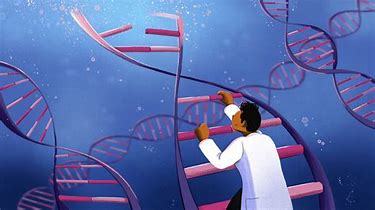
Since the club’s inception, youth have been invited to participate in a range of
designing/making activities, including but not limited to Agent sheet (video game
authoring software), digital storytelling (digital media production that aims to document
and share everyday stories), marble wall (design of a wall “roller coaster” using spatial
reasoning and strategy), Squishy Circuits (conductive and insulating dough used to
electrical circuits and teach engineering concepts through play), and GarageBand (audio
software for music creation and podcasts). (19)
STEAM learning is vital because it makes STEM projects more engaging and entertaining. Students will be at liberty to incorporate their own artistic qualities in their works in order to enhance their creations, while also making it unique. Students will also understand scientific, mathematical, industrial, and technological concepts which will make them more suitable and prepared for many given obstacles. The inclusivity of art is fundamental because it opens people's minds to more creativity, and it helps them to think outside the box which is a good quality to have in all work and academic situations. Art and engineering can collide into one another in order to produce electricity without the assistance of other motors that would naturally allow the circuit to work on its own. The use of technology is critical because it attracts different learning styles and motivates students to learn. STEAM learning is still a fairly new concept, but educators should continue to use these strategies in their lessons throughout their academic teaching careers because it will make students more optimistic to learn.
Art demonstrtes power
Some possible solutions to evolving art-based classes in schools is to require teachers to 3take courses that demonstrate how to apply artistic thinking to the curriculum they will be teaching. They could include more hands-on and creative assignments in classes and connect them to their daily lessons, and they could also incorporate more technological aspects in the students' learning experience. STEAM education should be given an opportunity to modernize the educational system because creativity is a notion that can vitalize the whole idea of learning.
Content Page
Works Cited
Biederman, Charles, and David Bohm. Bohm-Biederman Correspondence : Creativity in Art and
Science, edited by Paavo Pylkkänen, Taylor & Francis Group, 1999. ProQuest Ebook Central,https://ebookcentral-proquest-com.libdatabase.newpaltz.edu/lib/newpaltz-ebooks/detail.action?docID=169643. Accessed 10 April 2020
Campos, Nancy. Personal Interview. 06 April 2020
Ford-Martin, Paula. "Art Therapy." The Gale Encyclopedia of Alternative Medicine, edited by Jacqueline L. Longe and Kristine Krapp, vol. 1, Gale, 2001, pp. 121-124. Gale eBooks, https://link-gale com.libdatabase.newpaltz.edu/apps/doc/CX3405100052/GVRL?u=newpaltz&sid=GVRL&xid=54b6ff0f. Accessed 31 Mar. 2020.
Gutiérrez, Kris D., et al. “Learning as Movement in Social Design-Based Experiments: Play as a Leading Activity.” Human Development (0018716X), vol. 62, no. 1/2, Jan. 2019, pp. 66–82. EBSCOhost, doi:10.1159/000496239.
Oefner, Fabian. “Psychedelic Science” TED Upload. TEDGlobal2013, June 2013.
Wilkinson, Rian. Personal Interview. 11 April 2020
.
Works Cited
Biederman, Charles, and David Bohm. Bohm-Biederman Correspondence : Creativity in Art and
Science, edited by Paavo Pylkkänen, Taylor & Francis Group, 1999. ProQuest Ebook Central,https://ebookcentral-proquest-com.libdatabase.newpaltz.edu/lib/newpaltz-ebooks/detail.action?docID=169643. Accessed 10 April 2020
Campos, Nancy. Personal Interview. 06 April 2020
Ford-Martin, Paula. "Art Therapy." The Gale Encyclopedia of Alternative Medicine, edited by Jacqueline L. Longe and Kristine Krapp, vol. 1, Gale, 2001, pp. 121-124. Gale eBooks, https://link-gale com.libdatabase.newpaltz.edu/apps/doc/CX3405100052/GVRL?u=newpaltz&sid=GVRL&xid=54b6ff0f. Accessed 31 Mar. 2020.
Gutiérrez, Kris D., et al. “Learning as Movement in Social Design-Based Experiments: Play as a Leading Activity.” Human Development (0018716X), vol. 62, no. 1/2, Jan. 2019, pp. 66–82. EBSCOhost, doi:10.1159/000496239.
Oefner, Fabian. “Psychedelic Science” TED Upload. TEDGlobal2013, June 2013.
Wilkinson, Rian. Personal Interview. 11 April 2020
.
Contacts
- The Bronx, New York, United States

